




In short: Bakhoor, the Arabic word for incense, is an aromatic material that is burned or heated so its smoke can be smelled. Its best-known materials in the Gulf are oud (agarwood) and frankincense, along with prepared blends such as scented oud, maamoul and mabsous (local names for incense blends), and forms such as sticks and pyramid bakhoor. A name may describe the character of the scent rather than the material, so something called “Oud” may not be oud wood. Bakhoor smoke carries fine particles and gases, so indoors we advise an electric burner and a small amount, with ventilation. Lit charcoal gives off carbon monoxide, so do not light it in a closed room or in a bedroom, and open a window or a door for as long as it is lit.
Table of contents
- What is bakhoor?
- Types of bakhoor by material
- Oud
- Frankincense
- Sandalwood and scent blends
- Types of bakhoor by form
- Natural, induced, enhanced and scented oud: what is the difference?
- How to burn bakhoor: charcoal or an electric burner?
- Safety and ventilation
- How to choose the right bakhoor
- Read also
- References
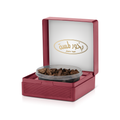
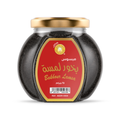
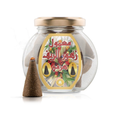
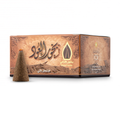
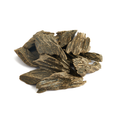
On a single shelf in a bakhoor market you will find dark pieces of oud, frankincense tears of varying color, boxes carrying local names such as maamoul and mabsous, and small cones. All of them are bakhoor; they differ in what they are made of and in how they are used, and the same name may mean two different things from one seller to the next.
What is bakhoor?
Bakhoor is any aromatic material that is burned or heated so its smoke can be smelled. Most of it is made from gums, resins, wood powders, herbs and spices [1], and it comes as sticks, cones, coils and powders, or as pieces placed on charcoal [1].
Types of bakhoor by material
The materials of bakhoor in the Gulf are mostly of three kinds: aromatic wood such as oud and sandalwood, resin such as frankincense, and blends made from wood or wood powder with oils and perfumes [2] [3].
Oud
Oud is an aromatic wood from trees of the genera Aquilaria and Gyrinops [4]. A healthy tree does not produce this scent; the aromatic resin forms in its wood only after a wound or an infection by insects or fungi [5] [6]. Because it forms rarely in the wild, it is now deliberately induced in cultivated trees by wounding or treating their wood [6].

Most oud is consumed as bakhoor, either as pieces burned as they are or as part of powdered bakhoor blends [7], and oud oil is distilled from it too [5] [4].
Oud grades vary by resin content, density (its weight relative to its volume), color, and sometimes scent [5].
Quality shows when the oud is burned: good oud burns evenly and slowly and its scent lasts longer, while poor oud may give off woody smells that irritate the eyes and nose [8].
Trees of both genera are listed in Appendix II of the Convention on International Trade in Endangered Species of Wild Fauna and Flora (CITES), because of heavy trade in them and their depletion in the wild, so their international trade is regulated [4] [5].
Frankincense
Frankincense, called luban in Arabic, is a gum resin from trees of the genus Boswellia, and one of its most important species is Boswellia sacra, in Oman and Yemen [9]. Most of it is alcohol-soluble resin, along with essential oil and water-soluble gums [9].
In Dhofar, Oman, frankincense is sold in four commercial grades, Hoojri, Najdi, Shathari and Shaabi, priced by the color, size and texture of the pieces. Yet when the oils of Hoojri and Shaabi were analyzed, they were similar in composition, although their prices differ greatly [10].
Most of the frankincense traded today comes from another species, Boswellia papyrifera, and the frankincense production of its trees is projected to halve in about 20 years [11]. Among the resins used in bakhoor besides frankincense is myrrh, covered in detail in our guide Bakhoor Ingredients.
Sandalwood and scent blends
Sandalwood is an aromatic wood from trees of the genus Santalum. Its oil is extracted from the heartwood of mature trees, and overexploitation has depleted its supply [12]. Some types of Arabian bakhoor are based on sandalwood, mixed with natural oils and perfumes [3].
Much of the bakhoor on the market is blends: wood or powder with added aromatic oils. The exact composition of incense sticks is usually a trade secret [1]. With blends, a name may describe the character of the scent rather than what the product is made of. Something called “Oud” may not be oud wood, and the notes listed on a product, meaning the scents its maker names, tell you more than its name does.
Types of bakhoor by form
Bakhoor comes as pieces of a single material, such as oud or frankincense, burned as they are, as prepared blends, or as sticks and cones made from a blend [1].
| Type | What it is | How to use it |
|---|---|---|
| Oud pieces | Pieces of oud wood in which the resin has formed [5] | On charcoal or an electric burner [2] |
| Maamoul | An Arabian incense blend [1] | Follow the directions on the package |
| Mabsous | A local name for a type of incense blend; we found no definition of it in a scientific reference | A small amount |
| Pyramid (cone) bakhoor | Bakhoor shaped as a cone or pyramid [1] | Follow the directions on the package |
| Incense sticks | A thin bamboo stick coated with the incense blend [1] | Light the tip and let it smoke |
| Frankincense | Pieces of resin from Boswellia trees [9] | On charcoal or an electric burner [2] |
Names such as maamoul and mabsous are local, and their meaning varies from one country to another and from one shop to another; types of Arabian bakhoor do not appear to have standard ingredients, even within the same country [3]. Go by the ingredients and directions printed on the package, and if you come across a name you do not know, ask the seller what it is made of.
Natural, induced, enhanced and scented oud: what is the difference?
- Natural oud: wood in which the resin formed after the tree was wounded or infected in the wild [6].
- Induced oud: wood from cultivated trees that were deliberately wounded or treated so the resin forms in them. It is real oud whose quality varies with the induction method, and traditional physical wounding usually produces oud of low quality and low yield [6].
- Enhanced oud: a trade description for which we found no standard definition. It may mean oud with something added to strengthen its scent, so ask the seller what was added.
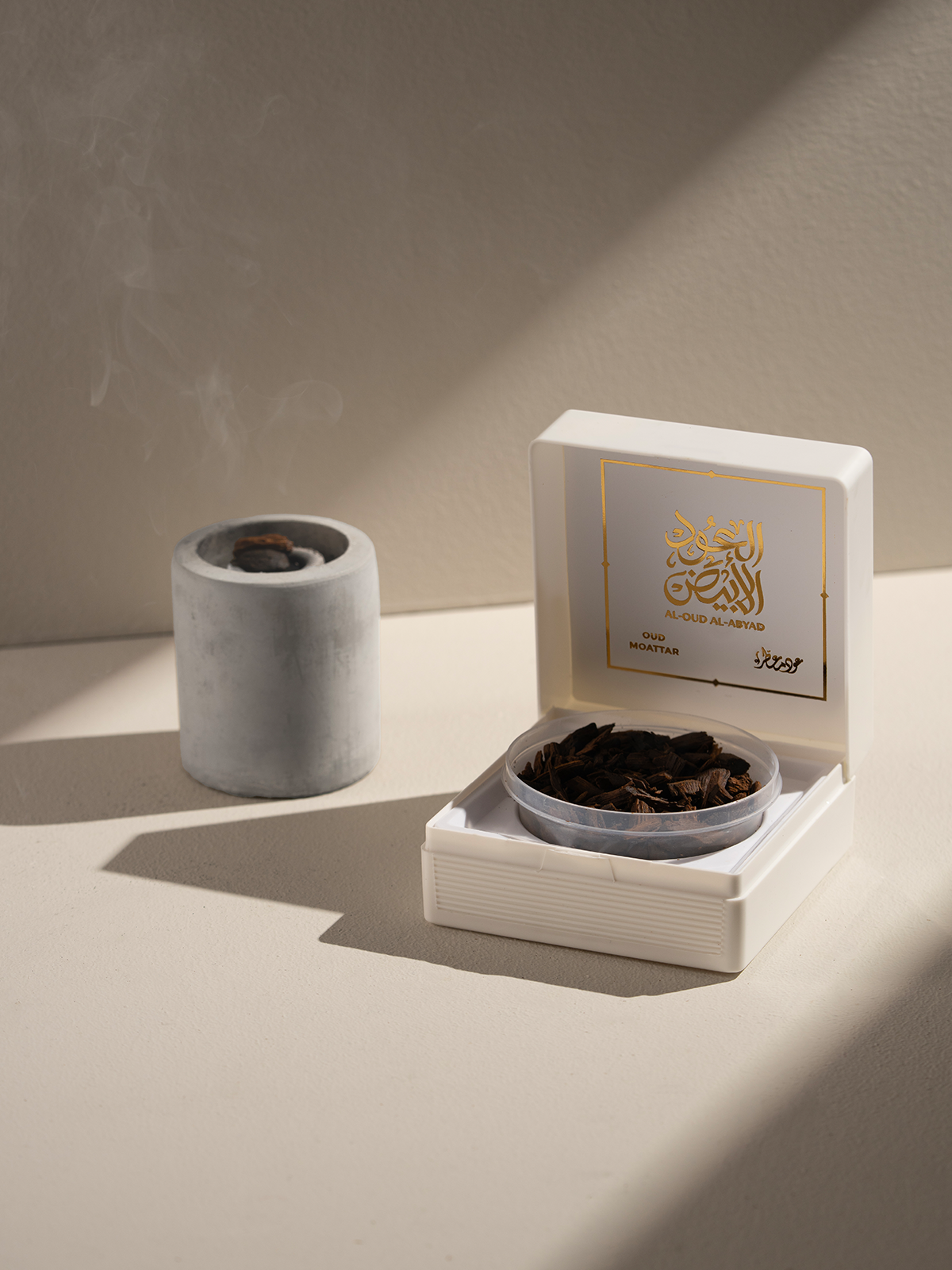
- Scented oud: pieces of wood saturated with aromatic oils, burned on charcoal or an electric burner like oud pieces [2].

How to burn bakhoor: charcoal or an electric burner?
Indoors we choose the electric burner, with ventilation; it heats bakhoor without charcoal. The traditional method is to place it on lit charcoal in an incense burner.
The reason lies in the charcoal: in an experiment on bakhoor from the UAE burned on charcoal, in a closed test chamber the size of a living room, the charcoal disc, not the bakhoor, was the main source of carbon monoxide and nitrogen oxides, even with half a disc [13]. An electric burner has been recommended in place of charcoal or an open flame [2].
The region knows the danger of lit charcoal in poorly ventilated homes: charcoal was the most common source of carbon monoxide poisoning among cases that reached the emergency department in Al Ain in the United Arab Emirates, and almost all of them (98%) occurred in the winter months [14]. The study did not say for what purpose the charcoal was lit.
If you use charcoal:
- Put a carbon monoxide detector near every sleeping area [15].
- Place the burner on a stable, heat-resistant surface, away from curtains and out of children's reach.
- Start with a small piece of bakhoor, and add more if needed.
- Do not leave lit charcoal unattended, and put it out completely after use.
Lit charcoal gives off carbon monoxide, a gas with no color or smell [15], so do not light it in a closed room or in a bedroom, do not leave it lit while you sleep, and open a window or a door for as long as it is lit. An electric burner, for its part, has no charcoal, so it spares you the charcoal gas, but the bakhoor smoke remains with it. If you or anyone in the home develops a headache, dizziness or nausea while the charcoal is lit, go out into the fresh air at once, put it out on your way if you can do so without delay, and get medical advice as soon as possible, and do not go back until you have had it. If there is difficulty breathing, sudden confusion, loss of consciousness, weakness, or chest or muscle pain, call an ambulance [16]. Our guide Making Bakhoor Scent Last at Home has a detailed section on the charcoal incense burner.
Safety and ventilation
This is what we advise for burning bakhoor at home:
- Let fresh air into the room while burning bakhoor, and spend less time in the smoke [1].
- Use a small amount, and avoid burning bakhoor for a long time in a small, closed or crowded room [2].
- If someone at home has asthma or a chest allergy, ask their doctor about burning bakhoor.
Bakhoor smoke, like all combustion smoke, carries fine particles and gases, among them carbon monoxide, nitrogen dioxide and sulfur dioxide, volatile organic compounds such as benzene, aldehydes, and polycyclic aromatic hydrocarbons [1].
In the same closed-chamber experiment, the average concentrations of particles, carbon monoxide and nitrogen oxides exceeded the limits set by government regulations [13]. In homes in the UAE, more frequent burning of bakhoor was linked to higher concentrations of fine and coarse particles indoors [17].
The studies we reviewed did not describe any amount as safe. The closest they come is a suggestion that bakhoor should not exceed 0.5–1 gram a day [2], which is a suggestion, not a limit established by experiment, and all the recommendations point toward reducing exposure.
How to choose the right bakhoor
Start from what you are buying it for. For the home we lean toward a lightly scented blend, in a small amount on an electric burner. For receiving guests and for occasions, oud pieces, scented oud or maamoul, and your own taste in scent decides among them.
Then read the notes before the name, and do not let price be your only guide: oud grades, although they rest on resin content and density [5], are usually judged by sight and smell [6], and two grades of frankincense can be similar in composition yet far apart in price [10]. Ask the seller where the oud comes from, because there are adulterated woods on the market [5]. And try a small amount before you buy a large one.
Read also
- Bakhoor Ingredients: What It Is Made Of and How to Read Its Label
- Oud (Agarwood): A Reference Guide to Its Formation, Types, Oil and Trade
- Making Bakhoor Scent Last at Home: Amount, Ventilation and Safety
- Musk in Perfumery: Animal, Synthetic and Its Types
- The History of Perfume: From the Incense Route to Synthetic Materials
- How to Store Bakhoor, Oud and Oud Oil: A Storage Guide
References
- Lin TC, Krishnaswamy G, Chi DS. Incense smoke: clinical, structural and molecular effects on airway disease. Clinical and Molecular Allergy. 2008;6:3. PMC2377255. Accessed 5 October 2026.
- Bu-Olayan AH, Thomas BV. Exposition of respiratory ailments from trace metals concentrations in incenses. Scientific Reports. 2021;11(1):10210. PMC8140077. Accessed 5 October 2026.
- Al-Rawas OA, Al-Maniri AA, Al-Riyami BM. Home exposure to Arabian incense (bakhour) and asthma symptoms in children: a community survey in two regions in Oman. BMC Pulmonary Medicine. 2009;9:23. doi:10.1186/1471-2466-9-23. PMC2693130. Accessed 5 October 2026.
- Layola MRR, Sengupta S, Mallick B, Shil T, Shaw R, Banu F, Chakraborty S, Sardar S, et al. Phylogenetic analysis of the Critically Endangered Aquilaria khasiana (Thymelaeaceae) using barcode markers and chloroplast genome, with updated conservation status. Scientific Reports. 2025;15(1):21511. PMC12214818. Accessed 5 October 2026.
- Naziz PS, Das R, Sen S. The Scent of Stress: Evidence From the Unique Fragrance of Agarwood. Frontiers in Plant Science. 2019;10:840. PMC6646531. Accessed 5 October 2026.
- Shivanand P, Arbie NF, Krishnamoorthy S, Ahmad N. Agarwood—The Fragrant Molecules of a Wounded Tree. Molecules. 2022;27(11):3386. PMC9181942. Accessed 5 October 2026.
- López-Sampson A, Page T. History of Use and Trade of Agarwood. Economic Botany. 2018;72(1):107–129. doi:10.1007/s12231-018-9408-4. Open-access text: researchonline.jcu.edu.au/58720. Accessed 5 October 2026.
- Yang L, Yang JL, Dong WH, Wang YL, Zeng J, Yuan JZ, Wang H, Mei WL, Dai HF. The Characteristic Fragrant Sesquiterpenes and 2-(2-Phenylethyl)chromones in Wild and Cultivated “Qi-Nan” Agarwood. Molecules. 2021;26(2):436. doi:10.3390/molecules26020436. PMC7830084. Accessed 5 October 2026.
- Baeten J, Deforce K, Challe S, De Vos D, Degryse P. Holy Smoke in Medieval Funerary Rites: Chemical Fingerprints of Frankincense in Southern Belgian Incense Burners. PLoS One. 2014;9(11):e113142. PMC4229304. Accessed 5 October 2026.
- Al-Saidi S, Rameshkumar KB, Hisham A, Sivakumar N, Al-Kindy S. Composition and antibacterial activity of the essential oils of four commercial grades of Omani luban, the oleo-gum resin of Boswellia sacra Flueck. Chemistry & Biodiversity. 2012;9(3):615–624. doi:10.1002/cbdv.201100189. PMID: 22422529. Accessed 5 October 2026.
- Bongers F, Groenendijk P, Bekele T, Birhane E, et al. Frankincense in peril. Nature Sustainability. 2019;2(7):602–610. doi:10.1038/s41893-019-0322-2. Accessed 5 October 2026.
- Zha W, Zi J. Advances in biotechnological production of santalenes and santalols. Chinese Herbal Medicines. 2021;13(1):90–97. PMC9476758. Accessed 5 October 2026.
- Cohen R, Sexton KG, Yeatts KB. Hazard assessment of United Arab Emirates (UAE) incense smoke. Science of the Total Environment. 2013;458–460:176–186. doi:10.1016/j.scitotenv.2013.03.101. PMID: 23648447. Accessed 5 October 2026. The experiment’s details, including the half disc and the air exchange rate, are in the master’s paper on which it was based: Cohen RC. Hazard Assessment of United Arab Emirates (UAE) Incense Smoke. Master’s paper, University of North Carolina at Chapel Hill; 2012. doi:10.17615/k902-r429. Accessed 17 October 2026.
- Al Kaabi JM, Wheatley AD, Barss P, Al Shamsi M, Lababidi A, Mushtaq A. Carbon monoxide poisoning in the United Arab Emirates. International Journal of Occupational and Environmental Health. 2011;17(3):202–209. doi:10.1179/107735211799041940. PMID: 21905387. Accessed 5 October 2026.
- Centers for Disease Control and Prevention (CDC). Carbon Monoxide Poisoning Basics. Last reviewed: 12 January 2026. cdc.gov/carbon-monoxide/about. Accessed 27 September 2026.
- NHS. Carbon monoxide poisoning. Last reviewed: 16 December 2025. nhs.uk. Accessed 15 October 2026.
- Yeatts KB, El-Sadig M, Leith D, et al. Indoor Air Pollutants and Health in the United Arab Emirates. Environmental Health Perspectives. 2012;120(5):687–694. PMC3346777. Accessed 5 October 2026.
Prepared and edited by: Sedr Al-Khaleej Perfumes team
Last reviewed: 14 October 2026
Was this article helpful?
Leave a comment
Comments are reviewed before they appear. Your email address won’t be shown.